What do loyalty programs do for CLV?
Loyalty programs increase Customer Lifetime Value (CLV) by driving more purchases, higher order values, and longer customer relationships.
Getting a new customer costs up to 6× more than keeping one. CPMs on Meta are up 12%. Google Search costs jumped 27% between 2022 and 2024. GDPR is cutting off cookie-based targeting. Acquiring new customers is harder and more expensive every quarter.
Yet 71% of Gen Z shoppers are more likely to join a loyalty program now than 12 months ago (LoyaltyLion, 2025). The fastest-growing demographic actively wants to be rewarded. The window is open – but not forever.
Loyalty programs are the most efficient CLV lever available to Shopify merchants right now. And platforms like Yuko mean you can launch a full program – points, tiers, referrals, reviews, memberships – in under 15 minutes, for free.
306% | 47% | 3.2× | 5%→25% |
|---|---|---|---|
Higher CLV for emotionally loyal customers (Motista) | Avg CLV lift for Yuko merchants within 6 months | Avg repeat purchase rate increase with Yuko | More retention = up to 25% more profit (Bain & Co) |
What Is CLV – And Why It Matters for Every Shopify Store
CLV (also called LTV or CLTV – same metric, different abbreviations) is the total revenue a customer generates from their first order to their last.
Formula: Avg Order Value × Purchase Frequency × Customer Lifespan = CLV.
CLV in Numbers – Real Shopify Store Example AOV: $65 | Frequency: 4 orders/year Without loyalty → Lifespan 2.5 yrs → CLV = $650 With loyalty → Lifespan 4 yrs, Frequency 5/yr → CLV = $1,300 +$650 per customer. 100% CLV increase. From a free loyalty program. |
Why CLV Must Always Exceed CAC
CAC (Customer Acquisition Cost) = (Marketing + Sales Costs + Wages + Overhead) ÷ New Customers Acquired. If CAC > CLV, you are losing money on every customer. Loyalty programs fix the CLV side of that equation.
Scenario | Revenue | Acquisition Cost | Profit |
|---|---|---|---|
6 shirts → 1 loyal customer | $180 | $20 (acquire once) | $160 |
6 shirts → 6 new customers | $180 | $120 (acquire 6×) | $60 |
Same revenue. Same product. 267% more profit by focusing on one loyal customer. That is the case for loyalty in one table. (Source: SaaSquatch)
The Psychology Behind Why Loyalty Programs Work
Discounts attract customers. Psychology keeps them. The best programs engineer three proven human behaviors:
1. The Psychology Behind Why Loyalty Programs Work: Aversion
Once a customer earns the Gold tier, the fear of dropping back to Silver drives more spending than chasing Platinum ever would. 57% of consumers spend more specifically to maintain their status, not just earn it. Yuko VIP Tiers include automated downgrade notifications that trigger this response automatically.
2. The Progress Effect
A member 50 points from a reward adds items to their cart to cross the threshold. Programs with visible progress bars see significantly higher redemption rates. Yuko’s storefront widgets show live progress bars on every page – the same always-visible loop driving Starbucks’ 16× monthly visit rate.
3. Social Identity
Being a Rouge member at Sephora or Diamond at Hilton creates an identity that customers protect, display, and talk about. Emotionally loyal customers have 306% higher CLV than transactional ones (Motista).
The Competitive Moat A competitor can match your price overnight. They cannot undo 3 years of earned tier status, accumulated points, and personalized history your loyalty members have built with your brand. That is the real CLV case – switching feels painful, not just inconvenient. |
5 Ways Loyalty Programs Directly Grow CLV
1. Higher Purchase Frequency
Top programs boost frequency by 15–25% annually (McKinsey). Starbucks members visit 16×/month vs. 6× for non-members. Yuko’s points per purchase for every order automatically.
2. Higher Average Order Value
Loyalty members spend 57% more per transaction (Accenture). Tier thresholds push spend – a Sephora customer at $310 adds one product to hit $350 VIB status. Yuko VIP Tiers let you set exactly those thresholds. Pair with an OT: Theme Sections cross-sell section and customers hit the threshold naturally.
3. Longer Customer Lifespan
A 5% retention increase = 25–95% more profit (Harvard Business Review). Once customers have status and points, switching means starting from zero. Yuko’s Loyalty Page shows members what they have earned on every visit – making rewards feel real and close.
4. Better Personalization Data
Every loyalty purchase is a data point. Personalized experiences drive 110% more purchases and 40% higher spend (BCG). Yuko’s workflow automation turns that data into triggered, personalized loyalty reminders and win-back campaigns.
Besides, platforms like Growave also combine loyalty, reviews, wishlists, referrals, and customer accounts into one retention ecosystem, helping Shopify brands turn customer behavior into personalized repeat-purchase experiences.
5. Free Word-of-Mouth Referrals
79% of consumers recommend brands with strong loyalty programs. Yuko’s referral program automates the whole cycle – unique referral links, two-sided rewards, real-time tracking, and built-in fraud protection.
A 7% increase in brand loyalty can lead to an 85% increase in Customer Lifetime Value. – Forbes |
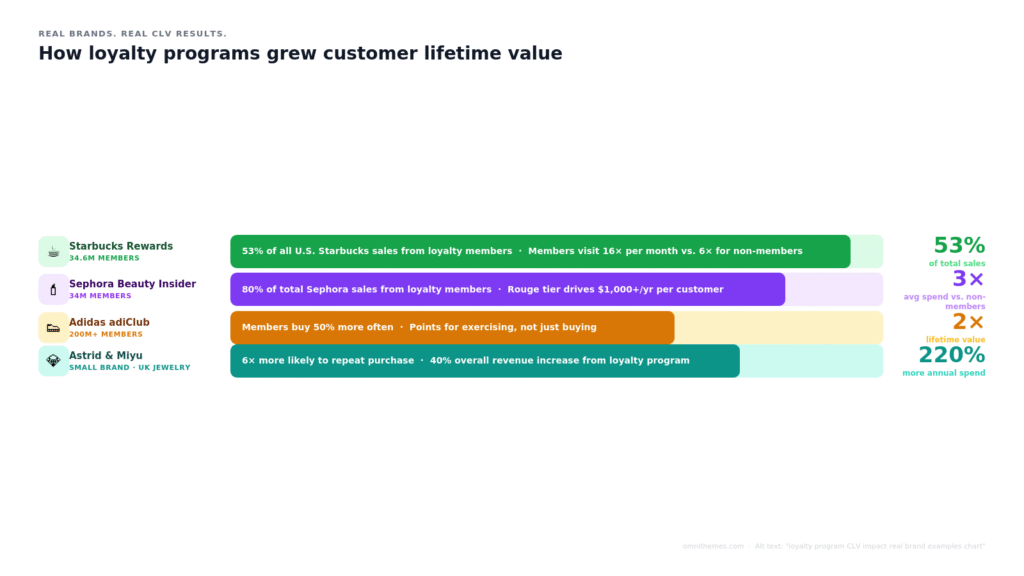
Real Brands, Real Numbers – 4 Programs That Deliver
Proof beats theory. Here is what the best loyalty programs have actually achieved:
Starbucks Rewards – The Gold Standard
- 34.6M active U.S. members as of Q1 2025 – up 13% year-over-year
- 53% of all U.S. Starbucks sales come from Rewards members
- $207M in breakage revenue from unredeemed points in 2024 alone
- 16× monthly visits for members vs. 6× for non-members
Why it works: Coffee is a daily ritual. The Stars system ties that habit to a reward. Yuko’s loyalty widgets give your store the same always-visible progress loop on every page.
Sephora Beauty Insider – Tiers That Drive Stretch Spending
- 34M members – 80% of total Sephora sales come from loyalty members
- 3× average spend vs. non-members per transaction
- Three spend tiers: Insider (free), VIB ($350/yr), Rouge ($1,000/yr)
Why it works: Tier thresholds are psychologically perfect. A customer at $800 stretches to $1,000 to hit Rouge. Yuko VIP Tiers replicate this model – set your thresholds, perks, and auto-upgrades in minutes.
- Amazon Prime – The Paid Model That Dominates CLV
- Prime members spend 2× more per year than non-Prime customers
- Paid loyalty members are 2.63× more likely to spend more than free tier members
Why it works: Once you pay the fee, you want to earn it back. Yuko Memberships let you launch paid and free membership tiers – exclusive access, member-only pricing, recurring revenue – no dev work required.
72% of consumers say loyalty programs make them more likely to spend with their preferred brand. – Deloitte Consumer Loyalty Program Survey, 2025 (n=5,564 US adults) |
The 4 Types of Loyalty Programs and What Each Does to CLV
- POINTS-BASED
Best for daily/weekly purchase brands. 81% of members buy more frequently. Launch with Yuko – 12+ earn actions, free plan available.
- TIERED (VIP)
Best for fashion and beauty. Spend thresholds stretch AOV. Hilton members stay 28% longer. Set up with Yuko VIP Tiers in 5 minutes.
- PAID MEMBERSHIPS
Best for premium brands. Members spend 2.63× more. Risk: 50% cancel in year one if the first-month value is not immediate. Yuko Memberships – paid and free tiers, early access, recurring revenue.
- VALUE-BASED / ETHICAL
30% of consumers now stay loyal for ethical reasons – up from 24% in 2021 (LoyaltyLion/Emarsys). 34% switched brands for sustainability reasons in 2024. Reward eco-actions, recycling, or cause donations. Emotional loyalty cannot be competed away by a discount.
The Easiest Way to Launch a Loyalty Program on Shopify: Yuko
Most Shopify stores run 4–6 separate apps for loyalty, reviews, referrals, and memberships. Four monthly fees. Four dashboards. Integrations that rarely talk to each other. Yuko replaces all of them.
FEATURED TOOL: Yuko – All-in-One Shopify Retention Platform
- Yuko (yuko.so) unifies loyalty programs, VIP tiers, referrals, reviews, and memberships into one Shopify dashboard. No app overload. No developer needed.
- 47% average CLV lift within 6 months across Yuko merchants
- 3.2× average increase in repeat purchase rate
- Trusted by 100+ Shopify brands – free plan, live in 15 minutes, no contracts
Features
- Points & Rewards: 12+ earn actions – purchases, reviews, birthdays, social follows
- VIP Tiers: Fully customizable tier programs – auto upgrades, custom perks per tier
- Referrals: Automated referral campaigns – unique links, two-sided rewards, fraud protection
- Memberships: Paid and free tiers with early access, member-only pricing, recurring revenue
- Reviews: Automated review requests via email and SMS, photo/video UGC, Google Shopping snippets
- Workflows: Visual automation builder – trigger win-backs, loyalty reminders, referral nudges automatically
Free plan available. Live in 15 minutes. No contracts. No code. See plans
Side-by-Side Comparison: Top Loyalty Programs
Program | Best For | Type | Members | CLV Impact | Standout Feature |
|---|---|---|---|---|---|
Starbucks Rewards | Daily habit brands | Points + Tiers | 34.6M active | +48% mobile CLV | Preloaded card = guaranteed future spend |
Sephora Beauty Insider | Beauty / cosmetics | Points + Tiers | 34M members | 3× avg spend | Rouge tier drives $1K+/yr per customer |
Amazon Prime | E-commerce | Paid subscription | 200M+ globally | 2× annual spend | 20+ service ecosystem makes cancellation painful |
Adidas adiClub | Sportswear / fitness | Points + Activity | 200M+ | 2× lifetime value | Points for exercising, not just buying |
McDonald’s MyRewards | Fast food / QSR | Points | 175M (90-day) | $30B loyalty sales/yr | Gamification keeps daily engagement high |
Hilton Honors | Hotels / travel | Points + Tiers | 165M+ | Members stay 28% longer | 4-tier structure with milestone bonuses |
How to Build a Loyalty Program That Grows CLV
Use the decision framework first, then follow the 5-step build process.
Your Situation | Best Approach |
|---|---|
Just starting (< $10K/mo) | Free points program via Yuko – launch in 15 min, zero code |
500+ products / large catalog | Tiered program – use Yuko VIP Tiers to set spend thresholds |
Daily purchase frequency | App-based points – Yuko’s 12+ earn actions keep daily engagement |
Premium brand positioning | Paid membership tier – Yuko Memberships (Amazon Prime model) |
Fitness / lifestyle brand | Activity-based points – reward actions, not just purchases |
Budget is zero | Yuko free plan – reviews + basic loyalty, no monthly fee |
Step 1: Calculate Your CLV Baseline
Before anything, calculate: AOV × Purchase Frequency × Lifespan. That is your benchmark. Everything post-launch gets measured against it.
Step 2: Make Early Rewards Achievable
If customers wait 6 months to earn anything, they quit. Show progress within 2–3 purchases. 86% disengage when rewards feel too far away (Ebbo, 2024). With Yuko’s non-purchase earn actions, a customer earns points for creating an account or leaving a review – a win before their second order.
Step 3: Personalize Every Touchpoint
Loyalty members in personalized programs are 8× more satisfied. Yuko’s workflow builder automates post-purchase review requests, tier-upgrade nudges, and win-back emails. Pair with an OT: Theme Sections product recommendation section – built-in upsell blocks surface the right products without extra apps.
Step 4: Go Mobile-First
60% of loyalty members prefer apps to physical cards. Mobile loyalty programs improve CLV by 48% (Entrepreneur). Yuko’s widget library renders loyalty panels mobile-optimized on every screen. And the OT: Theme Sections product recommendation section is built mobile-first with green PageSpeed scores – so every returning loyalty member lands on a fast store.
Step 5: Track These 5 KPIs Monthly
- Redemption rate ≥ 20% = healthy | < 10% = rewards not valuable enough
- Purchase frequency going up month-over-month = program working
- AOV: members vs. non-members members should beat non-members by 15%+
- Churn rate < 5%/quarter = healthy | > 8% = retention broken
- Program ROI = (Incremental Revenue − Cost) ÷ Cost × 100 | target: 400%+
All five KPIs are visible in your Yuko dashboard – loyalty activity, referral revenue, review volume, and CLV side by side.
90% of companies with loyalty programs report positive ROI – average return of 4.8–4.9× the investment. – SellersCommerce, 2025 |
Why Your Shopify Theme Is the Foundation of Every Loyalty Program
A loyalty program drives repeat visits. But if those visits land on a slow, cluttered store, the repeat purchase never happens. The loyalty investment is wasted.
Recommend the theme builder
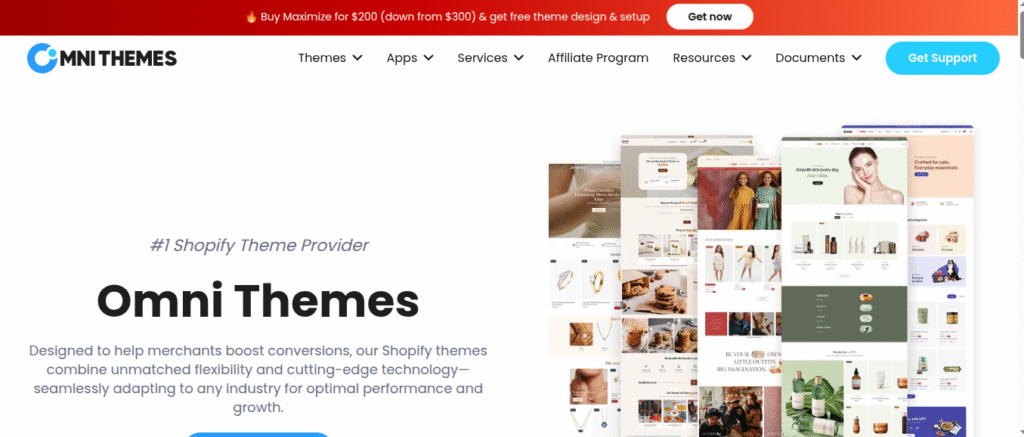
Omni Themes is a Shopify theme provider with 13+ years of ecommerce experience, trusted by 30,000+ merchants across 200 countries. Their flagship Eurus Theme is a mobile-first, speed-optimized Shopify theme built to convert – 52+ customizable sections, built-in cross-sell, sticky cart, and upsell flows, all without extra apps.
Why this matters for loyalty: Every loyalty member who returns lands on your theme first. A slow, cluttered store kills the repeat purchase – no matter how strong the reward. The right Shopify theme is not a nice-to-have. It is the last step between your loyalty program investment and actual revenue.
“I saw my store grow from zero to six figures in the first year. Eurus grew with my business and gave me the tools to nurture my customers.”
When Yuko drives loyalty members back to your store and converts that visit – you create a compounding CLV loop: loyalty brings them back, great UX makes them spend more, that purchase earns points that bring them back again.
Loyalty Trends and Final Verdict
The loyalty landscape is shifting fast. Here is what every Shopify merchant needs to know heading into the next 12 months:
- AI-personalized rewards: Programs now predict what customers want before they ask. Yuko’s behavior-triggered workflows let Shopify brands replicate Amazon-level personalization without an enterprise budget.
- Brand loyalty is dropping – program loyalty is rising: Forrester projects brand loyalty will drop 25% in 2025 while program usage increases. The program IS the differentiator now.
- Reviews compound loyalty: Customers who leave reviews are 5× more likely to buy again. Yuko’s automated review requests close that loop – review written → points earned → next purchase triggered.
- Omnichannel is non-negotiable: A Harvard Business Review study of 46,000 shoppers found that omnichannel loyalty members spend 10% more online, 4% more in-store, and make 23% more repeat trips than single-channel shoppers. If your program only works on mobile or only in-store, you are leaving CLV on the table.
- Gamification works: 77% of consumers are more likely to join a gamified loyalty program. Badges for milestones, streaks for consistency, leaderboards for top buyers, and timed challenges that pull forward spending are all now standard. Build them into your Yuko points setup from day one.
The verdict is clear: loyalty programs work when they are built with intention. A bad program is a discount machine that eats margin. A great one builds relationships that competitors cannot buy their way into.
The math: a 5% retention boost = 25–95% more profit. Members generate 12–18% more revenue annually. Emotionally loyal customers have 306% higher CLV. Yuko merchants see a 47% average CLV lift within 6 months. And those members return to a store built on the OT: Theme Sections app by Omnithemes – mobile-first, fast-loading, and designed to convert every returning loyalty member into a completed order.
Loyalty programs generate 5–7× more revenue than they cost to run. The return on retention always beats the return on acquisition. – MoEngage, 2025 |
5 Mistakes That Kill CLV
- Mistake 1: Rewards are too hard to reach. If a $5 reward needs 10,000 points, customers quit before redeeming. Keep early thresholds achievable in 2–3 purchases. Yuko’s earn rate settings let you tune points per dollar so early wins come fast.
- Mistake 2: Copying competitors. 80% of loyalty programs look identical in their industry (PwC). Differentiation – unique earn actions, exclusive perks, a distinctive brand voice – is what makes people join and stay. Also, the average US consumer belongs to 16.7 programs. Yours needs to feel different.
- Mistake 3: No personalization. Generic emails get ignored. Yuko’s workflow automation turns purchase data into triggered, personalized messages delivered at the right moment.
- Mistake 4: Ignoring mobile. Over 80% of customers will download a loyalty app. If your store is slow on mobile, members churn before checkout. The OT: Theme Sections app is built mobile-first – every returning customer lands on a fast, beautiful experience.
- Mistake 5: Launching once and forgetting. Sephora updates Beauty Insider constantly. 79% of companies plan to revamp their programs within 3 years. Yuko’s playbooks give you seasonal retention blueprints so you never have to start from scratch.
Final Thoughts
Loyalty programs are not a marketing add-on. They are a business model decision. Every store that focuses on retention instead of just acquisition changes its unit economics permanently. The numbers are not subtle – selling to a loyal customer costs 6x less, generates 267% more profit per transaction, and builds a CLV that compounds year after year.
The brands in this article – Starbucks, Sephora, Adidas, Astrid & Miyu — did not succeed because they had bigger budgets. They succeeded because they built systems that made returning feel rewarding. That is replicable at any size.
For Shopify merchants, the path is straightforward: launch a loyalty program with Yuko (free plan, 15 minutes, no code), build it on a store theme that converts returning visitors into orders – the Eurus Theme by Omni Themes and measure the five KPIs monthly until the compounding kicks in.
Start with one thing today: calculate your current CLV. AOV x purchase frequency x customer lifespan. Write that number down. Then launch a loyalty program and check it again in 90 days. That gap is what loyalty does.